

Kombucha, a tangy, effervescent beverage, has enjoyed a surge in popularity in recent years. But this fizzy concoction is no newcomer to the world stage. With roots tracing back centuries, kombucha boasts a rich history intertwined with ancient cultures and traditional medicine.
Origins and Early History
While its exact origins remain shrouded in mystery, kombucha’s story likely began in Northeast Asia, possibly in China or Mongolia. The name itself hints at its enigmatic past. “Kombucha” is believed to be derived from “Kombu,” a type of edible kelp, and “cha,” meaning tea. This suggests that early versions of the drink may have incorporated seaweed, though modern kombucha typically uses black or green tea.
Evidence of kombucha-like beverages appears in ancient Chinese texts dating back to 220 BC. These texts describe a “tea mushroom” used to ferment sweetened tea, creating a health-promoting elixir. From China, the “tea mushroom” culture spread along trade routes, reaching Japan, Russia, and eventually Europe.
Traditional Uses and Beliefs
Throughout history, kombucha has been revered for its potential health benefits. In traditional medicine systems, it was often used to:
- Boost Immunity: Kombucha’s probiotic properties were believed to strengthen the immune system and protect against various ailments.
- Improve Digestion: The drink’s acidity was thought to aid digestion and alleviate digestive issues.
- Detoxify the Body: Kombucha was often consumed as a natural detoxifier, helping to cleanse the body of toxins.
- Increase Energy Levels: The slight caffeine content and purported adaptogenic properties were believed to enhance energy and combat fatigue.
The Kombucha-Making Process
Kombucha’s unique characteristics arise from a symbiotic culture of bacteria and yeast (SCOBY), often referred to as the “mother.” This gelatinous disc floats on the surface of the sweetened tea during fermentation.
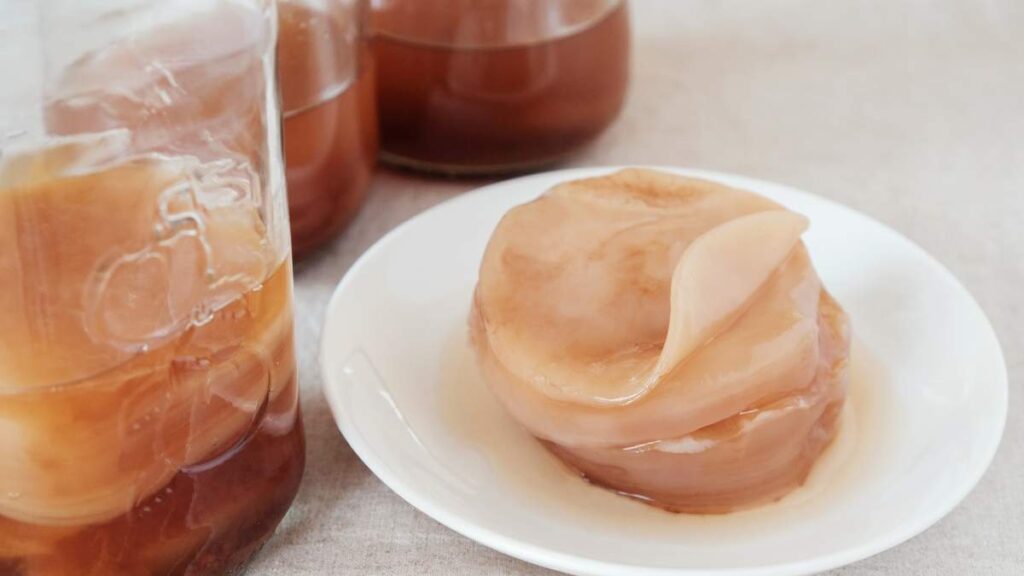
The basic kombucha-making process involves:
- Sweetening the Tea: Black or green tea is brewed and sweetened with sugar.
- Adding the SCOBY: The SCOBY and some starter liquid (from a previous batch) are added to the sweetened tea.
- Fermentation: The mixture is left to ferment for 7-10 days in a clean, covered container at room temperature.
- Second Fermentation (Optional): For added carbonation and flavor, the kombucha may be bottled with fruit, herbs, or spices for a second fermentation period.
- Bottling and Enjoyment: Once the desired level of tartness and carbonation is reached, the kombucha is bottled and enjoyed.
